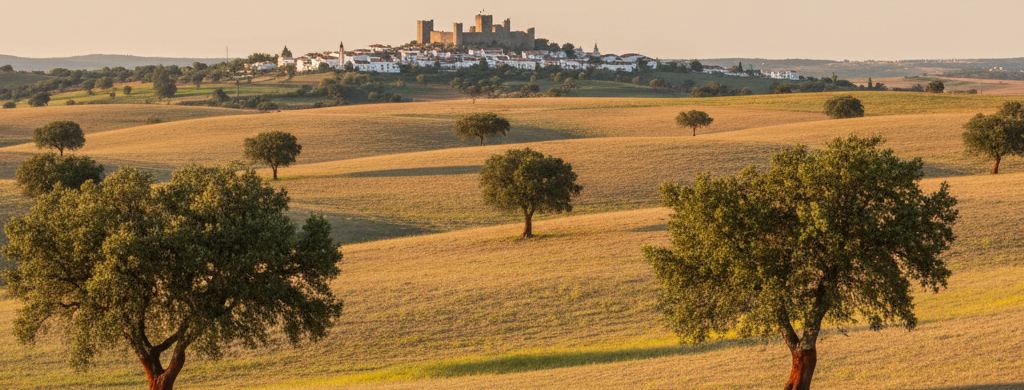
Cork bark stripped to orange, stone arches over a gorge
Two places sit at the middle mark: moderate spread weeks reserved with a San Diego booking office
Two places carry this mark. Seven nights on the dry plains of southern Portugal, from $1,490 per person, in April, May or the back end of September and October. Eight nights among the stone villages above a Greek gorge, from $1,580 per person, in May, June, September or October. Both figures are for two sharing a double room. Moderate means the poor version takes a real day off you and leaves the rest standing.
Reserve one of these weeksSend the form whenever it suits: it never shuts. Someone here replies inside one working day, and no charge arises at this end.
Two of four, and what it removes
The middle of a four point scale measures distance between the two printed versions of a week, not the chance of getting either. At this level the bad week removes a component: one day, one view, one piece of the season you came for. It does not remove the shape of the trip. Both places at this mark run seven or eight nights across a spread of separate ground, so no single day carries the whole thing. That is really what the number two describes: a week with enough parts that one can fail. Where the office has doubts about which side of the line a place sits, it prints the wider number, because the cost of overselling a week is carried by you and the cost of underselling it is carried here.
Where a middle mark comes from
Middle marks come from two directions. Some places are steady ground with one fragile ingredient: a work season that runs to its own calendar, a path along a rim that closes when the rock is wet, a distance you can only walk in cool air. Others are places with no fragile ingredient at all but a wide swing in comfort, where late spring can be twenty degrees and pleasant or thirty five and airless on the same dates. Both end up at two. Both are sold in shoulder months for that reason, and both weeks are written so that the fixed parts, the beds, the food, the guiding and the transfers, hold whatever happens. Read the months on each place page before the price. They are doing more work than the figure is.
Bark, stone and the things that stay
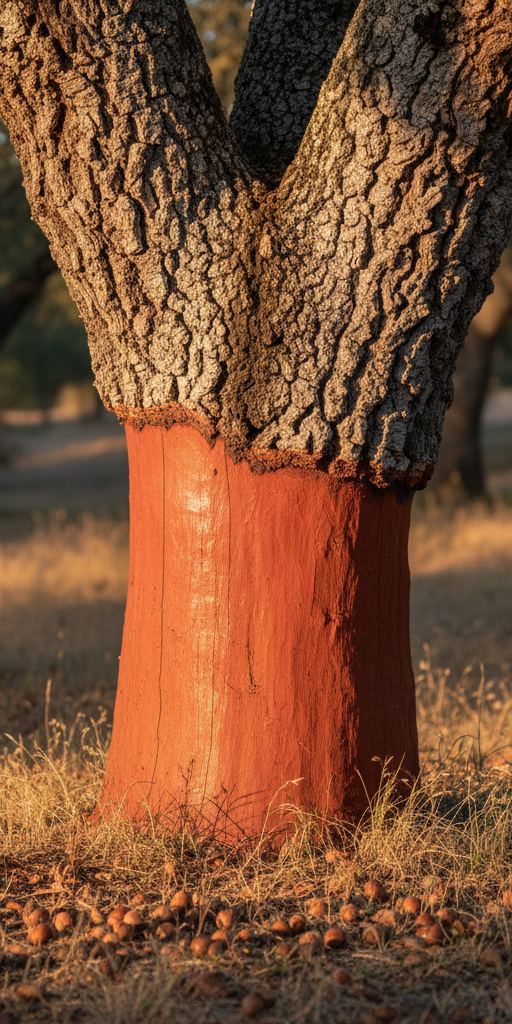
Bark is the thing you can put a hand on at this level. In cork country the oaks stand far apart on dry grass, and the ones cut in the last season carry a band of raw orange trunk under the grey where the bark was taken off in sheets. It regrows over nine years and the year of the cut is painted on the trunk. In the Greek half of this mark the equivalent is stone: single arch bridges thrown over side streams, slate roofs weighted flat, lanes paved end to end in grey limestone. Neither depends on a sky. Both are what you still walk up to on a bad week, and both are the reason the middle mark is a middle mark rather than a three.
2 places sit here

Asked before anybody commits
Which of the two middle places is better?
The office will not rank them. One is a wide dry plain with long level walking and heavy cooking; the other is eight nights of stone villages with real climbing between them and colder evenings. They cost within ninety dollars of each other for a reason. Tell the office what you can walk and what you cannot eat, and it will tell you which weeks fit.
Can a place move from two to three?
Yes, and it has happened. If an operator drops a component, if a path closes for a season, or if the office finds that the poor version of a week is worse than what it printed, the number goes up and the page is rewritten. It never moves down to make a slow month look better. Anyone already booked is told in writing what changed.
Do we pay this office?
No. The company that runs the week bills you directly in its own name and holds your card details itself. This office takes no payment, holds no card, and is paid a commission by that company after you have travelled. That is also why it can print both halves of a week: the figure on this page does not move whichever half you get.
Finish the sentence and a week gets reserved
Whatever the hour, what you send lands here and is read by a person, who replies inside one working day. Sending it binds you to nothing, and no sum is ever taken at this end.